Back, but going.

May 15, 2012

I’m back from a few nights camping with James, whose company I greatly enjoyed riding through Utah’s Canyonlands in 2010. This time, we biked from Flagstaff to the Grand Canyon, following the pavement-free Arizona Trail. If you’re lucky enough to be visiting this part of the world, I can’t think of a better way of arriving at the Grand Canyon – 100 miles of sublime trails and idyllic camping spots, preluding one of the most surreal, larger-than-life views I’ve ever experienced. I’ll get a trip report up at some point, just as soon as I get through a backlog of writing.

Flagstaff has made a great base this last week. Come 7pm, I’ve headed out of town to freecamp on a hilltop in the national forest, enjoying a city overlook under stars, and awakening to a soul-warming sunrise each morning. It’s helped reset my body clock. My daily ritual has been simple: loading up my gear by 6am, rolling down the hill to Macy’s cafe to write (and enjoy budget-friendly, delicious Day Old pastries). My days here have offered the chance to see friends, ride wonderful trails and soak up some of Flagstaff’s hip, North Arizonan lifestyle. I’ve also been fortuitous enough to meet up with Megan, passing through town on exactly the same weekend. The third member of our Canyonlands posse (another of the South West’s premier 100 mile dirt road loops), we hadn’t seen each other since Nicaragua, when she came out to ride with her incredible little baby Neva.

Last time I was in Flagstaff, I based myself out of Josh’s burgeoning Bike Shop Hub, so it was good to visit and see how the business has developed. Incidentally, Josh has offered to affiliate this blog to his shop. This means that if you order online anything via this link, I’ll get a small cut. In the interests of transparency, I’ll talk more about this business deal at some point soon; ultimately though, it’s a way of supporting this blog, without influencing actual content. The good part is that buying any gear through these links won’t cost you a penny more than it would normally. As Josh stocks the likes of Tubus racks and Ortlieb panniers (including all the tricky-to-find extras), it’s hard to go wrong (-:

Lastly, my big travel news is that I’m finally booked to return to Ecuador! It’s been a long time coming – I left South America almost a year ago after riding down from Alaska, to return to the UK for some unexpected lung surgery. I’ll be catching the train this evening and flying out of LA on the 17th, destination Quito. So, if anyone wants to meet up in LA on the 16th, I’m around and about. Better still, if you know a place I can crash for the night, please let me know – otherwise I’ll be kipping in the airport before my morning flight back South.

Weaving between ponderosas synonimous with the higher elevations of the South West. For this part of the AZT, James tried t pulling the Tout Terrain Mule, which worked perfect with his lightweight Gunnar mountain bike.

Not a car in sight. Just 1oo miles of trails, jeep track, big skies…

And then this…

In time for sunset…

James communes with four legged locals.

Perfect camping out in high meadows. James carried his Tarptent Double Rainbow, while I had a chance to use my new solo Moment, both of which are ultralight and great value.

Note to self…

Back in Flag, I hung out amidst the inner workings of Bike Shop Hub. As ever, thanks to Josh, Robin, Robert and Ted for welcoming me in. Whenever I’ve passed through Northern Arizona, Josh has always offered me a workshop to service my bike and an address to receive mail.

Pack ‘em high. Panniers, racks and trailers galore…

The place to come for all your Ortlieb bits and bobs… Bike Trailer Shop even stocks Revelate gear too.

Have you ever seen a bubble wrap roll as gargantuan as this? I’d have had a field day as a kid.

As well as selling a dizzying range of trailers, Bike Shop Hub build their own. This is their fully customisable cargo hauler, the provisionally called The Really Big Bongo, soon to be available in two sizes. It’s rated to pull some 200lbs (90kg), and is aimed at tradesmen who want to go car-free, amongst others.

It’s expertly crafted in Flagstaff by Stu Henderson, who also forms a third of Sendero Cycles. The arch design stops water pooling in the waterproof cover.

Quick releases allow the angle of the arm to be easily  adjusted, so the trailer can be pulled by hand, or to form a stand.

I also had the chance too to scrub my dust-ingrained gear Rocket bag. A tip for long distance bikepackers –  keep your framebag’s zips clean to ensure years of rugged use. I popped it on the scales too: 1.1lbs, or 500g. It’s more than most framebags as it has secret compartments, extra padding and bonus sleeves. But it’s certainly useful enough to be worth its weight in gold.

James has a Long Haul Trucker, so I borrowed his rack and panniers to experiment with trailer-less riding on my Ogre. Using a blend of Porcelain Rocket bags and small Ortlieb front roller panniers, the above setup includes everything I’d need for indefinite travel…

Beady-eyed gearheads might have noticed that I have a Porcelain Rocket Anything Bag (100g, or 4oz) strapped directly to a Profile Kage. As much as I love the concept of Salsa’s all-embracing Anything Cages, I’m not finding them burly enough for my uses – perhaps because I have a habit of throwing down the bike for a quick photo. My take? Great idea, but best treated with care. Bring on some chromo versions, Salsa!

I’ve opted to take the Surly Ogre away with me, despite its awkwardly sourced 29er wheels and tyres. Which means taking care of them. Seen here is non other than mountain biking legend Joe Murray, of Kona and Voodoo fame, showing me how best to keep my Deore hubs running smoothly.

Jumping back to cages for a moment… Joe sold me a limited edition, titanium, triple eyeletted King Kage I’d been coveting – the perfect fit for a 1.2l Kleen Kanteen. Be great to get another run of these going…

We also went out for a ride, climbing up to the Overlook and looping round the challenging terrain of Rocky Ridge.

Even though Joe retired from racing in 1990, he still comprehensively crushed me on the climbs. And the descents… In my defence, I should add that Joe was a NORBA national champion with an as yet unmatched streak of 12 straight victories…

His weapon of choice: a prototype, rock-munching Voodoo Zopob 29er.

Talking of munching… Aside from sustaining myself with Day Old pastries, I’ve enjoyed wholesome home cooking too. James is the master of conjuring up delicious food on the tightest of budgets… like these sliced corn tortillas snacks. The trick? Fry with a touch of olive oil, salt and pepper, until crispy.

Or this, a simple mix beg special.

James’ Mix Veg Special:

Chop up celery, onion, carrots, zucchini, garlic and some fire roasted red pepper (to fire roast, simply place directly on burner, for a sweet, charred, South Western flavour).

Saute in a touch of olive oil.

Add in kale towards the end.

Squeeze in the secret ingredient, lime juice, which adds acidity and brings out the vivid flavours of each vegetable – without the need to add fat or salt.

Enjoy!

He rustled up some polenta too – a stone ground corn – prepared with smoked gouda, pepper, salt and olive oil. incidentally, corn, beans and squash form the ‘Three Sisters’, combining to make a complete, energy-rich protein. Great cycling food.

The full effect. Perhaps unsurprisingly, James has worked as a chef in France…

To round it off, homemade coconut macaroons, on a bed of farmer’s market strawberries, under a topping of homemade whipped cream (simple: place heavy cream in jar and shake!).

Little Neva joined us too. As expected, the dessert went down particularly well…

More Coco-di-loco…

May 9, 2012

As I mentioned in my previous post, the Coconino Loop is a bikepacking journey around the Coconino National Forest, Northern Arizona. Concocted by Scott Morris, of Topofusion fame, and his buddy Chad Brown - both bikepacking fiends – it knits together 250 miles of trails and jeep tracks, with only a handful of paved miles to its name. It’s an incredibly diverse loop, flitting from corridors of ponderosas pines to the open, red rock desert of Sedona, via Cottonwood, Mingus Mountain, the Verde River and Williams.

I say ‘bikepacking’ because the route claims to be almost 50% singletrack, much of which is relatively technical. Between the slabby trails of Sedona, the medley of rough jeep tracks through the ponderosas, and the vertical challenges of Mingus Mountain, it’s certainly tough enough to warrant packing as light as you can – so forget panniers or a trailer on this one.

The loop is raced in 4 stages, or even by madmen who tackle it in one fell swoop - for the grand prize of a box of donuts no less. Yes, that means riding 250 miles of technical terrain straight through the night…

As mortals, we rode it in 4 and a half days, largely due to my obsession for taking photos and a couple of late starts. I’d add to that our first day out of Flag was slowed down considerably by tacky, clay-like mud on the Anderson Plateau, having rained the night before. A tenacious compound, it ‘slo-moed’ us down to a literal standstill, jabbing hopelessly with twigs to clear clogged drivetrains. So, keep an eye on the weather if you’re planning the ride. Spring and Fall are best, to avoid the sweltering heat of Sedona.

We ran fully rigid setups, but agreed front suspension would have made for less exhausting days – we were both pretty spent by the time we were done. Although you can trim this ride down to three nights, four felt good to us. We certainly didn’t feel like we were slacking…

For stat-heads:

Distance: 253 miles

Average speed: 7.4 mph

Elevation gain: 20 671ft (the official taly is 28 000ft. We diverted round the infamous Mingus Mountain hike ‘n bike and stayed on forest roads, which might account for 2000ft of the shortfall, but I’m not sure where the rest of the discrepancy lies)

Time: 34 hours moving time

GPS:

Although the parts of the route that follow the Arizona Trail are well signposted, you definitely need a GPS for this ride. All the relevant info can be downloaded from the bikepacking.net. I used my lovely new Garmin Etrex 20 (thank you Nancy!) and though I have yet to unearth all its secrets, I’m now a GPS convert. Battery life was great – at least 40 hours with lithiums AAs, leaving it on and not fiddling with menus during the day.

Coco Lite

I’m all for shouldering the bike if it gets me to places I’d otherwise not be able to reach – or to avoid pavement. But if there’s a good dirt road alternative, I’m happy to take that too. To avoid the route’s most infamous hike ‘n bike, I’d recommend taking the Mingus Mountain Bypass (there’s a separate gpx file) which skirts round the top of the mountain, keeping to mellow, scenic forest roads for the most part. It meets the main route some 10 miles later. We noticed that it’s also possible to turn off onto a graded dirt road at a couple of points on the way up to the Bill Williams Overlook, saving yourself some potential off-the-bike toils. If the trail on the other side is littered with blowdown, you can follow the dirt road down into Williams too.

Rigs:

I rode my Surly Ogre with my usual Porcelain Rocket kit. I was travelling light, but not as light as most. The Ogre carries a few extra pounds round its waist (easily slimmed back with a lighter wheelset) and I had some 6.5 lbs (3kg) of camera kit to lug round too – my DLSR and a few lenses, plus spare battery – so I certainly wasn’t riding as light as I could have been.

Gary took his AM Peirce, fitted with a 1×9 drivetrain and Stan’s ZTR tubeless rims, weighing in at around 25lbs. His full rig (minus food and water) tipped the scales 34lbs 12oz (15.7kg), plus 5lbs 10 oz (2.56kg) in his pack. Gary knows how to pack! He had tubeless tyres and I ran sealant in my inner tubes.

We both packed lightweight tarps (only used one night), and made sure we had enough layers for cooler conditions. I carried my Clikstand cookset, while Gary relied on cold food.

Here’s just an overview of the ride – I’m saving some photos for a story I hope to write up… You can check out Gary’s pics here.

DSC_7902-2.jpg

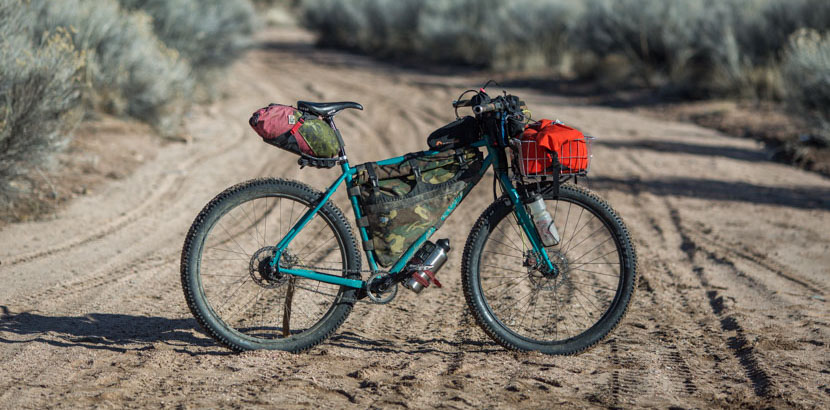
The two bikepacking steeds. My Surly Ogre, and Gary’s AM Peirce.

DSC_5554.jpg

Easing into the ride on the Arizona Trail at our start point of Flagstaff.

DSC_5633.jpg

Unfortunately, rain the night before had transformed what should have been 10 miles of blissful singletrack in a sticky, treacly brew. Definitely not derailleur friendly: where’s that Rohloff when you need it…

DSC_5707-2.jpg

Much of the AZT picks its way through corridors of ponderosas and alleyways of rock gardens…

DSC_5751-3.jpg

Linking one grassy plateau to the next…

DSC_5736-2.jpg

We met this Japanese AZT through-hiker on the route. Apart from in Sedona, we didn’t see anyone else on the trails.

Dropping down from the Mogollon Rim at Schnebly Hill Overlook. Built in 1902, the Old Munds Wagon trail was used by homesteaders in the Verde Valley to sell produce and livestock in Flagstaff.

Spring is in the air – a wonderful time to be in the desert.

_MG_0300.jpg

Our descent into Sedona marked a change in flora – we were entering the land of agave and cacti.

Sedona is said to be a centre of vortexes to heightened spiritual and metaphysical energy…

It’s also a mountain biking mecca. The Coconino Loop weaves one trail together with the next – like Broken Arrow, a Sedona Classic.

Cathedral Rock. Note Pink Jeep in the background. At the risk of sounding like a zealot, these jeeps disgorge tourists too lazy to hike the few miles needed to get here. Not ideal for desert peace and tranquility…

Spot Gary if you can…

There he goes…

DSC_6374.jpg

Catching these miniature barrel cacti as they began to flower was a highlight of the desert experience for me.

DSC_6580.jpg

The waters of Buddha Beach were so tempting we crossed them without even needing to, straying briefly off route.

DSC_6662.jpg

Leaving Sedona for solitude once more.

DSC_6630.jpg

The Lime Kiln Trail was originally constructed in the 1880s to burn lime; now it’s just the wisp of a sandy path across the desert.

DSC_6709.jpg

More splashes of colour…

DSC_6719.jpg

And the desert rat’s favourite, the spindly, spikey occatillo cacti.

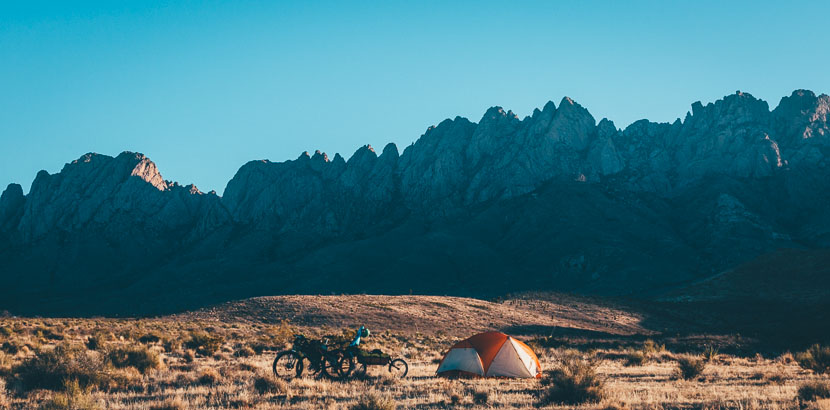
No need for the tarp… A perfect camping spot on a plateau above Cottonwood.

Cottonwood lured us in its grocery store, where set up camp for an hour of feeding and gear repairs. Climbing back out from Cottonwood towards Mingus Mountain was tough in the heat; sweat flowed off my helmet peak like a waterfall. That’s San Francisco Peak in the distance, where we began.

Tired legs and loose rocks = some pushing.

DSC_6961.jpg

The classic hide of an alligator juniper, as we climbed up in altitude once more.

DSC_7008.jpg

The route unearths all kinds of rarely used jeep tracks. At one point, we followed a powerline for a few miles across the valley.

DSC_7019.jpg

Coyote Springs offered a welcome chance to stop for lunch and refill water bottles. Despite the life forms, we didn’t bother to purify it, and lived to tell the tale.

DSC_7141.jpg

Stopping to soak it all it up, before the gravel road descent back down to the Verde River, where we camped the night.

Which, of course, was met by a drawn out climb back out of the valley. Foolishly, we’d expected an easy trail to round off the morning, before lunch in Williams…

DSC_7342.jpg

But we ended up climbing back up to 9000ft, culminating with an infamous hike ‘n bike. Blowdown made our much anticipated descent from the Bill Williams lookout more of an assault course than a ride.

Eventually, the trail opened up once more for some sweet riding.

DSC_7412.jpg

Williams – on the National Register of Historic Places – boasts some classic signage that harks back to the historic Route 66. I’m a sucker for ’50s Americana.

DSC_7421.jpg

It was also home to the most excellent Rolando’s Mexican Restaurant. This double burrito special cost $9, and fed me for both lunch and dinner. You need to stop at this place if you’re doing this ride.

DSC_7438.jpg

A good excuse for a break: waiting for the cargo train to chug by.

DSC_7568-2.jpg

Before long, we were back amongst the avenues of ponderosas once more.

DSC_7499-2.jpg

Then, we turned off onto trail again, following singletrack around Sycamore Canyon, dodging volcanic babyheads as we went. Given our tired legs, some sections were more than a little awkward to ride…

Don’t look down…

DSC_7521.jpg

Great views and campspots abound… The latter part of the trail smooths out, reward for previous toils!

Maybe one day there will be a picture of a bikepacker…

DSC_7768.jpg

Eventually we closed in on Snowbowl, back up at 9000ft, at the foot of the lofty San Francisco Peak.

DSC_7859-2.jpg

From here, 14 miles of AZT awaited, a ribbon of singletrack perfectly crafted into the hillside. We weaved between rock and tree with effortless grace.

DSC_7840.jpg

So good!

DSC_7934.jpg

Back in Flagstaff, where a shower at the $40 dollar Canyon Inn Motel (eventually) shifted ingrained dust and mud… But not memories (-:

Cheers Gary! End of ride celebration at the Dairy Queen.

If truth be told, I’ve become a lax mechanic since owning a Rohloff. Internal gear hubs will do that to you. My Rohloff has run faultlessly for the years I’ve owned it, bar a change of bearings after many thousands of miles of rugged use.

Now that I’m back with derailleurs, the price I pay for my slothfulness is a worn chain, cassette and middle chainring… to the tune of a hundred greenbacks. I used to sing the praises of maintaining clean cogs and rotating chains regularly on a long tour, both of which will eek countless adventures out of your drivetrain, and help keep your bills down. Now that I’m riding derailleurs again, I better take my own advice and pull my socks up.

Still, if I have to spend cash on my bike, I like to do so in a shop like Flagstaff Bicycle Revolution, Arizona.

In my mind, this is how a bicycle shop should be. It offers a wide, idisoyncratic range of bikes and parts to suit all budgets – high end full sussers and utility bikes alike. A choice of $70 WTBs, or $20 CSTs. A sofa for lounging about on, wifi on hand and good music. Friendly, helpful staff. For those in need of their pre-ride caffeine fix, I’m told the coffee is the tastiest in town.

Best of all a bicycle tourist like me (with only a multitool to my name), the Bicycle Revolution offers a full equipped workstation to install your own parts. Yep, you read that right. Work stand, wheel truing stand, headset press, cone spanners, allen keys, crescent wrenches are available for free… Add to this an impressive selection of bikepacking kit, and even a couple of fat bikes for rent, and you have yourself a bike shop that stands out from the ordinary.

DSC_8060.jpg

Not to self. Pull up (New Mexican) socks and maintain bike better…

DSC_7955.jpg

Revolution this way.

DSC_7957.jpg

Any shop with a Big Dummy longtail parked up outside and bikepacking kit in stock gets an appreciative grin from me.

DSC_8005.jpg

2 Salsa Mukluks amongst the rental fleet. Fat Fun for just $25 a day.

DSC_7977.jpg

Fitting my new cassette.

DSC_7995.jpg

This parts bin reminded me of the bike co op Mayapedal, in Guatemala.

DSC_7990.jpg

Lucky dip.

DSC_7962.jpg

Tools to hand include a headset press and a wheel jig. Impressive.

DSC_7998.jpg

$30 well spent: a stainless steel Surly chainring, heavier but longer lasting than its aluminium counterpart. I’m using thumbshifters and it works fine without ramps, which would normally help ease the chain move between chainrings. Update: I’d only recommend doing this if you’re running an 8 speed drivetrain, as the teeth on the Surly ring are wider than normal, causing a 9 speed chain to occasionally snag. 

DSC_8083.jpg

New chainring, cassette, chain… Cables next…

DSC_8026.jpg

Flagstaff is uber bike friendly. Someone left this on the Ogre while I was tucking into one of Biff’s Bagels.

DSC_8032.jpg

There’s good camping just a couple of miles from downtown, where we enjoyed the rising Super Moon over the forest.

What to do if you forget your fork/spoon/spork.

Or, head 30 miles out of Flag, and you can get yourself a red rock view like this…

Just a quick post to announce that I’m back on the road, making my way west once more…

I’ve stopped in Flagstaff, home to some of my favourite trails in the States, to meet up with ‘Minimalist Master‘ Gary Blakley and tackle a ride that’s long been on my hit list…

The Coconino Loop is a 250 mile bikepacking journey linking Flagstaff with Sedona, Cottonwood and Williams, via the mighty wall of Mingus Mountain. With over 20 000 feet of climbing, the terrain is unrelenting as it is varied: snowy mountains, shaded pondera forest, baking desert, dusty red rock… the lot. Almost half of the ride follows singletrack trails; the rest traces roughly hewn jeep tracks and gravel county roads. Of course, no bikepacking adventure worth its salt is complete without a few gruelling hike ‘n bikes thrown in too. Curses and all.

I’m resting my sore butt and sifting through pics for a full report soon. Here’s a few for starters…

Headin’ west on the South West Chief.

Travel Light. Have more fun…

The Arizona Trail. Unending miles of Great Stuff.

Just tarps or sleeping out under the stars on this trip.

Good to be shiver-free camping again…

Overlooking red rock Sedona at Schnebly Hill. Perfect for feet dangling.

Broken Arrow trail. Keeps you on your toes.

The desert blooms.

You say. We follow.

San Francisco Peak. Arizona…

Sweet Flagstaffian singletrack…

More pics and words here

The wonders of Nancy’s ipad. 

Over winter, Nancy and I made the long journey south to the land of Texans, to bikepack around Big Bend State Ranch – just across the river from Mexico.

The full story has just made it into the glossy pages of Singletrack, an independent mountain bike magazine out of the UK. It’s a 2500 word tale spread over 8 pages, fleshed out substantially from the original blog post. I hope you enjoy it.

There’s lots of cool stuff in this issue, including a great feature on urban UK riding, a profile on 29er pioneer Wes Williams and musings on the impending 650B wheel phenomenon. Steve Worland’s pieces are always a favourite of mine.

You can download the latest magazine as a pdf (best to click on ‘two pages’ in the view option), or buy it from the App Store in itunes. The Singletrack App is £2.99 (or $4.99), and that includes any chosen copy of the magazine – Issue 73 is the current one. Or you can order yourself a lovely print version for £5.

Pictures of Texan singletrack. And prickly things…

Not all trips go quite to plan. In fact, not all trips even have a plan…

Last weekend, I delved into Santa Fe National Forest, home to the crumpled folds of the Sangre de Cristo mountains – Spanish for ‘Blood of Christ’, so named for their red hue come sunrise and sunset. In fact, the Sangre de Cristos form the southernmost subrange of the Rockies, stretching some 250 miles from Santa Fe to Salida, up in Colorado – which is where I’d first encountered them.

My companions were two long term Santa Fean residents: bikepacking eccentric Tim – I say this in the most endearing way – and aspiring bikepacking racer Joanne. Having driven out to Las Vegas (New Mexico that is, not Nevada) over on the eastern side of the forest, our plan was to ride back west to Santa Fe. Or maybe we’d make a loop north round Mora. Or perhaps even strike out towards Taos…

In any event, there’s nothing like getting completely, hopelessly lost for a refreshing sense of unabated exploration. It’s a good reminder too that at times it’s ok to forget the destination, and simply enjoy the moment. Even if it’s not the moment you had in mind…

Despite several valiant attempts at formulating a plan, by the time we'd unloaded our bikes, we were more focused on getting riding than worrying about details like direction. When the roads are as scenic and quiet as they are in northern New Mexico, sometimes it's hard to stop moving...

_MG_0069.jpg

Pavement gave way to dirt, as we followed a gently undulating road beside the Sapello River westwards. Things were looking good... until it dead ended in a private ranch. That night we pitched tent beside a grove of wintery aspens.

_MG_0165.jpg

We tried to follow a singletrack from our campsite, in the hope it would link us with trails on the western side of ridge. But it proved more hike than bike, so we opted to retrace our tyre tracks and look for a more rideable exit strategy. Did I mentioned we had a GPS? Unfortunately we left it in the car...

Luckily Tim had printed out detailed 1:20 000 topo maps. Unlikely, they didn't quite cover where we were heading...

Furthermore, our attempts to head north were foiled by a boundary of impregnable private land, despite public access indications on our map. So we settled on skirting round to the south towards Las Dispensias and Mineral Hull, via a well-packed gravel track that climbed once more into the forest.

_MG_0154.jpg

Soon, we were picking our way along a rutted dirt as we closed in on Hermit Peak, a jagged granite monolith that marks the extreme southern end of the Rockies.

_MG_0145.jpg

The cemetery here claimed to be established in 1985... but it looked more like it dated back to 1885.

_MG_0004.jpg

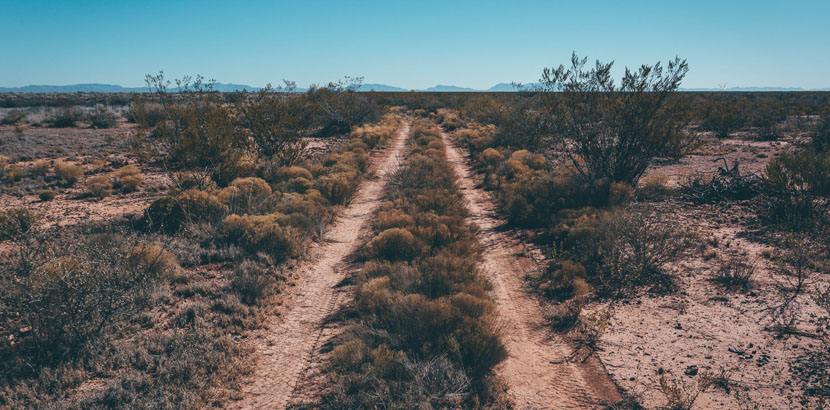
The trail between Las Dispensas and El Porvenir was unkept, overgrown.. and suited our tastes quite perfectly. South West USA - and New Mexico in particular - is blessed with an enviable network of forest service roads that all but guarantee traffic-free riding.

_MG_0026-2.jpg

Trailside tweaking. Joanne is prepping her rig for racing, so was using the trip as a chance to hone gear choices.

Here she is stretching out her muscled legs, shaped by many miles of riding and racing around the world - including with the US national team in the Pan American Championships in Cuba. More racehead than rambler, she was riding a custom carbon Crumpton cyclocross bike and left us in the dust on pavement. But her skinny tyres struggled more than our plump 29ers when the going got rough.

_MG_0061.jpg

A nosy llama in the meadows below Hermit Peak.

_MG_0085.jpg

Scoping out a suitable spot for our second night's camping.

_MG_0133.jpg

We stopped early to enjoy the afternoon sun from our vantage point above Mineral Hill.

What's on the menu? For me, it was Trader Joe's brown rice and ready-made chana masala. Quick 'n easy. Good 'n wholesome. Camping food for just a few dollars.

I'm rarely without my tub of peanut butter and a 'honey bear' to sustain me during the day. But in a ploy to shed weight, I'd transferred a few helpings into smaller Nalgene containers, more appropriate for miniature adventures. They were joined by Tim's secret energy boost formula: pure coconut oil. Coconut oil contains tryglycerides, which unlike other saturated fats, are burned immediately rather than being stored in the body. It also has healthy, fatty acids and all kinds of nutritional benefits - it's good for skin, hair and the heart.

Similarly, to shave valuable grams from my packlist, I'd taken advantage of a clear forecast and borrowed this 11oz (311g) 6 Moon Designs Gatewood Cape Tarp. It also transforms into a rather unfashionable (but eminently practical) poncho. More on this nifty little tarp later...

_MG_0152.jpg

The next morning, Joanne peeled off east to put in some road miles and return to her car, while we pressed on with our freeform adventure, Santa Fe in our distant sights. Hermit Peak - originally known by early Spanish settlers as El Cerro Del Tecalote, or the hill of the owl - loomed impressively behind us. In the 1860s, an Italian missionary made his home in a cave below there, trading carved crucifixes for food.

The village of San Geronimo reminded me of an aldea in backcountry Northern Mexico.

_MG_0170.jpg

It seemed to be comprised of little more than a collection of dishelled houses, a weather-cracked church and a few rusty pickup truck fading in the sun.

From San Pablo, we unearthed a trail that worked its way up slabs and steps of bedrock, back into the Santa Fe National Forest.

It's not always easy to discern what is a public right of way, and what might drive a gun-slinging rancher to arms... Unfortunately, it seems that many of the roads that historically provided public access to the National Forest now fall in private land.

_MG_0009.jpg

Finally we emerged onto a ridge, home to fingers of rutted trails that pointed in every which direction. Unfortunately, any efforts made to strike west towards Barillas Peak were met with improbably steep grades, disappearing trails and intense hike n' bikes.

_MG_0001.jpg

Another (scenic) dead end...

_MG_0184.jpg

The mighty ponderosa.

_MG_0018.jpg

And a miniature barrel cacti, a little out of place amongst the pine needles.

Finally, after an inspired, freeform bushwack (via dry creek beds and chicanes of pine trees) we emerged into the open sunlight of a beautiful meadow, marked with crumbling, red stone ruins. Bikepacking: takes you to places other tours cannot reach...

And the steeds that got us here. My Surly, dressed in Porcelain Rocket gear, and Tim's dropped-barred Raleigh, adorned with Revelate garb.

Tim was running both Anything Cages on his Reba suspension forks and water bottles. Another novel invention included running an upside-down aero bar, hoseclamped round the headtube to support a roll bag, rather than hanging weight of the handlebars.

From here on - given that we were well and truly off the pages of our map - we kept to the main thoroughfare and resisted the urge to explore further. Even it meant undoing the work we'd done all day, as we swung round back to whence we came...

_MG_0020.jpg

Classic New Mexico triptych. One...

_MG_0084.jpg

Two...

And three...

_MG_0090.jpg

Finally we emerged onto the fringes of the I-25, just a handful of miles from Las Vegas, and many more from Santa Fe. Not quite as planned... Still, even dining by the stained forecourt of the gas station couldn't take away from a superb weekend of camping, riding... and the unexpected discoveries of getting lost.

Thanks to Joanne for driving us out to Las Vegas and joining in the adventure, and Tim for his sheer enthusiasm for bikepacking in New Mexico… and his inimitable style of journey planning (-:

Plans are a brewin’ for more extensive travels.

But in the meantime, overnighters scratch the itch, and satisfy the fix…

DSC_5141-2.jpg

The Rail Trail parallels the old Santa Fe-Lamy line: 20 miles of powdery red-dirt, beelining across the New Mexican desert. Most of the trail is a fun mix of gently rolling doubletrack, woven with singletrack and sandy arroyo crossings. Unfortunately change is in the air. Bulldozers are out to 'realign' the trail, stripping it of its character and transforming it into a wide thoroughfare.

DSC_5154.jpg

The railway was laid down 1880, to connect Santa Fe with the main line running all the way from Chicago to Los Angeles and San Francisco. Lamy reached its heydey as a railroad town in the '30s. Nowadays vintage passenger railcars and a blunt yellow diesel ply this journey twice weekly with train nerds, and it was used in the filming of Elmore Leonard's 3:10 to Yuma remake,.

DSC_5168.jpg

Eldorado, one of the settlements en route to Lamy. At one point a coyote, bushy in its winter pelt, loped alongside me. We kept stealing glances at each other through the piñons.

DSC_5179.jpg

Peeling off from the Rail Trail, we ventured into the Galisteo Basin Preserve, where stealth camping opportunities abound. Kicking off the area's cultural history were the Paleo Indians, who arrived here in 6000-7500BC.

DSC_5354-2.jpg

A singletrack runs the length of the spine along the ridgetop, while meandering jeeps trails weave between piñons and junipers in the basin below. Vast, empty and open, there's a soothing, peaceful quality to the landscape here.

DSC_5396.jpg

Camping amongst the fingery cholla cacti. I absentmindedly trod on one.

Black Diamond Mega Light tarp mini review:

Very spacious for its weight (sleeps 3, weighs 1.27kg/2lbs 5oz)

Single pole makes for low bulk

Lots of headroom

Great for views

Simple, minimal, earthy camping

but

Doesn’t trap much heat – chilly in the winter

Not desert critter-friendly

Needed modifications – a midge net skirt and extra attach points for guylines, courtesy of Bear Paw Wilderness

It’s expensive ($270) for what it is, as are the accessories

DSC_5479.jpg

The Cholla: striking fear into bicycle inner tubes. And my feet.

DSC_5403.jpg

New Mexican spring storms seep across the skies like ink blots.

DSC_5499-2.jpg

May I recommend the Plat du Jour? Whole grain quinoa blend, served with slivers of zucchini and shards of carrot.

DSC_5417.jpg

Dessert treat. 1. Snip corner. 2. squeeze directly into mouth. Thanks be to Justin.

DSC_5488.jpg

Morning view.

DSC_5466.jpg

Sleepyhead.

I’ve been harping on a lot about trailers recently. So I figured I should also mention the Farfarer, which I had the opportunity to try out in Santa Cruz, just after my visit to the North American Handmade Bicycle Show in March.

I have to be honest and say I only rode it for a couple of days, with a relatively light load, as I was making the most of an unexpected opportunity to take it for a spin. And, I should add that the model I borrowed was built for 26in or skinny-ish 700c tyres, rather than the voluminous 29er rubber I was running on the Ogre – which resulted in some clearance issues.

Still, despite my limited time, I was quite taken by the Farfarer. It’s light in weight (just 4.3kg, or 9.5lbs) and simple in design, with a coupling that allows the trailer to be split into two for ease of packing or multi-modal travel. The hitch – while not being as easy to use as that on Tout Terrain’s Mule – uses a delrin bushing that’s supremely straightforward in its engineering, with very little to go wrong as a result. Spares are featherweight to carry too.

Like most singlewheel trailers, the Farfarer is rated to around the 30kg mark (70lbs) – I didn’t have anything like that amount during my short tour so I can’t comment on how it would feel. For the style of riding I do and the gear I carry (namely, my laptop, and the rough and tumble trails I drag it across) I’d spec a wider tyre than the one fitted, to offer more cushion. This said, the 20in, high pressure model rolled extremely nicely on the coastal highway – which leads me to believe this trailer would be perfect for adding extra capacity to a road bike, if that’s the only bike you have to tour on.

With its exposed but easily repaired Cordura load bag, there’s a nod to the Carradice school of aesthetics. In fact, the bag also acts as a hammock of sorts, helping to stabilise the trailer. Knowing the kind of conditions I always find myself in, I’d liked to have drain holes worked into the sling to limit water pooling during monsoonal downpours.

The bag itself is versatile though – it can hold your groceries or nest your backpack. Light objects, like a roll mat, can be strapped to the rails. If you’re looking to combine a hike into the wilderness as part of your bicycle tour, this trailer could well work out to be an interesting option.

Lastly, for those who like to support small businesses, the fact that the Farfarer is lovingly crafted in the backyard of an old, ramshackle house in sleepy Santa Cruz, may well appeal too.

All the spec is to be found here. The price is $400, plus shipping.

Update: Quentin mentioned he’s now designed a longer ‘stem’ with a higher rise for more clearance with FS/29er bikes.

DSC_2745.jpg

The Ogre and the Wayfarer. I've come to appreciate the extra stability that a seatpost-mounted trailer affords. As a seeker of singletrack, the downside to this design is that it cuts corners during tight turns. As you can see, clearances for a 29er wheel are a little tight, with the rear wheel rubbing occasionally on the canvas in certain situations. However, for general dirt road touring, this is unlikely to be an issue.

Although inspired by the dirt roads of the Californian mountains, the Wayfarer's designed for both on and off road riding: its elegant, curved chromo tubes even offer a little passive suspension. I tried an older version without couplings that would be tricky to box. The newer version can be split into two pieces.

Leaving Santa Cruz with Daniel and Matt, via a singletrack running beside the old railway. The line was originally used to transport strawberry crops to San Francisco - and later redwood lumber.

Unearthing dirt roads amongst Santa Cruz's towering redwoods is a highlight of any visit to California.

Sadly I didn’t get the chance to write up this beautiful ride from Santa Cruz to San Francisco, following dirt roads when we could find them – but luckily Daniel did. We have Quentin, half of the team behind the Farfarer, to thank for route advice in traversing this serenely beautiful part of California. For sure, it’s an area I hope to return to.

If I get a chance to try this trailer out in more detail, I’ll be sure to post some more thoughts. But in the meantime, have a look at the website to get more of a feel for what it’s about. And be sure to check out Quentin’s nuggets of wisdom if you’re thinking of touring the dirt roads of Northern California – his notes will have you itching to head west, to ride amongst the towering redwoods and along the windswept Pacific Coast.

Spring is in the air.

Although the sun’s rays have yet to permeate the northern folds of the mountains, where pockets of snow linger on, the mid elevation trails are revealing themselves like hidden gems.

And with winter’s retreat, comes untold scope for overnight escapes…

DSC_4540.jpg

Even the most diminutive of bike tours earns a guilt-free, culinary perk. The Kakawa Chocolate House specialises in all things chocolaty, and happens to be on the way out of town...

DSC_4548.jpg

From the vast array of exotic elixirs to sample, we shared a 'Marie Antoinette' - a heady blend of chocolate, almond milk, orange blossom water, Ceylon cinnamon, Mexican vanilla and orange blossom essential oil. 6 precious oz of hot chocolate for $6; so thick you can almost stand your spoon in it. That's Santa Fe chic.. and Santa Fe prices.

DSC_4566.jpg

Our ride took us out via the Dale Ball trail network, the spiderweb of singletrack that begins just a few miles from downtown.

DSC_4606-2.jpg

After working our way up amongst the piñons and cacti, we picked up the infamously steep, precipitous Chamisa Trail, teetering on the edge of the mountainside in the Santa Fe National Forest. With the trailer in tow, I made it a fair way before running out of steam.

DSC_4693.jpg

Once over the saddle, a steep, gullied descent plummeted us back down, opening out into a peaceful meadow surrounded by sentinel Ponderosas. Perfect camping conditions: it came complete with babbling brook and dappled afternoon light.

Ponderosas - characterised by their cinnamon-red bark and black crevasses.

DSC_4723.jpg

The face of concentration: Nancy studies for her acupuncture finals. The next day...

DSC_4696.jpg

Clouds and thunderstorms hovered overhead, but thankfully their threats proved empty.

DSC_4775.jpg

We'd resisted the pre-packed delights of Trader Joe's, and chosen instead to opt for simple camping fare. Quinoa and millet are high in protein and slow to burn - ideal cycling fodder. Millet is alkaline forming, which helps balance out a predominantly acidic modern diet.

Quick recipe:

  • Chop up zucchini, garlic, onion.
  • Add bouillon, salt and water.
  • Cook for a bit.
  • Then add tuna and tomatoes towards the end.
  • Squeeze in some lemon.
  • Enjoy.
DSC_4751.jpg
DSC_4782.jpg

Beginning the descent on the Windsor Trail the next morning, amongst pines, aspens and willows.

THe trail dived into the half-light of Tesuque Creek. This dark, fairy tale-like tunnel winds its way down along a bed of pine needles, over rocks, through rutted gullies...

And through one creek crossing after another - 17 of them in all. The trail reminded me of my old riding haunt in the UK, the Quantocks.

DSC_4884.jpg

Spring is in the air: cherry blossoms along the trail.

A traditional coyote fence, often seen in South West. These fences are traditionally made from dead aspen poles, and first used by Native Americans and early Spanish settlers for protecting livestock from wild animals, and marauding bands of desperados. This particular example surrounded a plush property in Tesuque...

The rig: I hooked up the Ogre with Tout Terrain's single wheel trailer, the Mule, providing ample capacity to carry all our kit. Despite the extra weight, I like the simplicity of biking with a trailer in these situations - it's easy to throw everything in, and just go.

DSC_4902.jpg

Knowing the conditions ahead, I'd jacked up the Mule to its highest suspension setting, providing 160mm of air sprung travel. Although this decreases stability, the chromo cage clears rocks and logs effortlessly.

Tout Terrain Mule Mini Review:

  • Easy to pack
  • Integrated stand is really useful
  • Seat post mounted hitch and 20in wheel offers a very stable ride off road
  • Tight turning circle
  • Really nicely made, with great attention to detail

but…

  • Very expensive (549-669 Euros)
  • Cuts corners on singletrack and through tight traffic
  • Heavy (7.3kg with stand) and longer than wheel-axle mounted trailers.
DSC_4932-2.jpg

Food and drink: bookends to any good ride. Refuelling at the Slurp Airstream back in Santa Fe.

Although packing light is always a goal to strive for, most long distance tourers haul a more generous payload, for one reason or another. The slant of this review is geared towards those people, especially on overseas, dirt road tours. Riding 29ers…

Ok, so first – despite how much I like them - I have to admit that 29ers (big wheel mountain bikes) don’t make complete sense for heavily-laden, dirt road touring in many parts of the world.

All things being equal, 700c rims are inherently less robust than their smaller, 26in counterparts. There’s a limited choice of touring-worthy rims to choose from and you’ll be lucky if you find a replacement outside the States, Europe or Australasia. More importantly, dirt road touring tyres – and by this I mean high volume rubber, with extra sidewall strength and a long lasting tread – are few and far between. Schwalbe’s Marathon Dureme is about the most suitable model I’ve found so far, and even that could do with more volume.

Don’t get me wrong. I love 29ers for lightweight bikepacking: big wheels roll smoothly without the need for suspension, shrinking the largest of rocks into more manageable sizes. A rigid 29er is both efficient to ride and incredibly capable off road.

Of course, there’s lots of variables – rider weight, the way you ride, what you carry. But for overseas travel, it boils down to the fact that 26in parts are found the world over – and 700c spares aren’t.

The Ogre set up for long distance bikepacking - 29ers are efficient over smooth surfaces yet incredibly capable on more challenging terrain too.

However, if a 29er is the bike you have – or the one you enjoy riding the most – there are ways round this.

You can start by speccing a suitable rim – Velocity Cliffhangers, Rigida Sputniks and Sun Rhyno Lites are all recommended – and having it built and trued professionally. You can pack as light as you can, carry a spare tyre and hope for the best. It’s very unlikely that a rim will fail but if it does, a 26in wheel will at least allow you to limp your way along until a replacement can be sent out. In Central America or Asia, you might even track down an alternative wheel size that’s close enough to keep you rolling – like the 28×1 1/2s that come on single speed Flying Pigeons and Heros.

Carrying an extra wheel

Alternatively, there’s the Extrawheel Voyager, which does two things. Like all trailers, it shifts weight – and thus wear and tear - away from your bike. This opens up the opportunity to run a lighter setup without fretting over all important tyres and wheels. Unlike other brands, however, its wheel also serves perfectly as a spare, in regions of the world where a replacement would be impossible to find. Granted a failed rim is an unlikely, worst case scenario. But the longer and more remote the tour, the more opportunity there is for a mechanical failure to potentially jeopardise your trip.

Why trailers?

I’m not going to argue the relative merits of trailers over panniers – opinions are divided. Certainly, trailers have their quirks and take time to get used to. Yet as much as I’d advocate packing light, there are times when you may prefer to be able to haul more weight – for a remote tour where extra food or water is needed, or to help a partner out.

There’s also the inclusiveness of trailers. They transform almost any bike into a touring machine – a possible solution if you only have one bicycle to hand, or you want to combine your tour with mountain biking local trails on a light and lively bike.

The ride

Overall, the Extrawheel handles well. There’s little side to side tug when riding out of the saddle, it tracks neatly behind the bike, and its big wheel skips confidently over rocks and roots. Panniers make access to cargo straightforward, though it’s worth packing weight low and evenly, as this impacts the way the trailer handles. Similarly, I found a small amount of weight on the handlebars, like a bar bag, helps to stabilise steering and reduce some low-frequency wobbles when pedalling. On steep, loose climb, it pays to concentrate on keeping the back of the bike weighted, to stop the rear wheel slipping out. As with most trailers, the Voyager suits sitting and spinning, rather than honking dramatically from side to side.

It’s worth pointing out that although the Extrawheel feels stable and settled at speed, it doesn’t feel nearly as planted as a seat-post mounted trailer trailer – like the pricier Tout Terrain Mule I’ve been touring with recently. It does, however, benefits from being considerably more compact, making it easier to weave around town – and deal with off the bike. The trailer is rated to a massive 30kg in payload. For day to day touring I wouldn’t burden it with anything like that amount, especially if headeding off road. But it’s good to know the capability is there if you really need it – hauling extra water, for instance.

Like most trailers, the Extrawheel takes some time getting used to. After a couple of outings, it’s starts to feel more comfortable and predictable – as you react and adapt to its quirks.

Pros:

The Extrawheel moves weight away from your bike, decreasing wear and tear on your wheels and tyres. Similarly, running three wheels allows you to rotate tyres more often (it’s the back tyre on your bike that takes the brunt of the action), so you can eek more life out of them.

At 3.6kg as tested, it’s light – and you can offset the need to carry a spare tyre and a rear rackm bringing it down to around 2.3kg. It’s simple too – there’s not a lot to go wrong.

It’s ideal for anyone who wants to ride their standard hardtail mountain bike, without buying a new wheelset or making modifications to the frame.

It tracks nicely behind you. It’s compact enough that the turning circle is tight and it won’t get in the way too much.

It’s fun to ride offroad. The bike feels lively and easy to bunnyhop. The big wheel rolls well over obstacles and doesn’t hook up on on curbs.

The compact size makes it easy to load on a train or bus, or store in a guesthouse.

The trailer can be broken down in size and stashed in a bag. With a big enough bike box, there should be room for a third wheel in there too.

Carrying a spare wheel could get you out of a fix when you most need it…

Cons:

Despite all the extra hardware, the Voyager only actually provides two large panniers worth of space –  40-50L – compared to other more capacious trailers, which typically offer 80L. If this isn’t enough, you’ll still need to run a rack on your bike too – or team it with a saddle bag or seat pack, from the likes of Porcelain Rocket or Revelate.

The load’s positioned relatively low, which is worth taking into account if you’re planning a rocky, rutted tours. This may affect pannier choice too, as some are shaped deeper than others.

Tents with longer poles don’t always fit in panniers. Unlike a traditional rear rack and panniers, there’s no platform to strap a tent to. I haven’t tried it, but this top rack could be a solution.

If loaded to its full rated capacity – 30kg – it can adversely affect steering, and I wouldn’t recommend it with that kind of payload if you’re riding off road.

Unlike many other single wheel trailers, the Extrawheel doesn’t double up well for utility uses back home – after all, it’s effectively the same as carrying two of panniers on a rear rack. Trailers with a larger loading bay – like the Mule, Yak or Farfarer – are more versatile, and easier to pack too.

DSC_4235.jpg

The Extrawheel Voyager moves weight off your bike and onto its wheel. By matching the wheel size, you can cannibalise it for spare parts: hub, rim and a tyre.

brokenwheellow.jpeg

A spare wheel can make or break a trip in this kind of extreme situation - as I experienced in a remote Laotian village. I re-laced the wheel and bought a cheap replacement for the trailer. Split rims aren't common, but they happen on long tours.

Our testing ground: the dirt roads and desert singletrack around Santa Fe, New Mexico. As you can see, the panniers sit relatively wide, and at a similar height to a front low rider rack, which can be an issue when tackling rocky or rutted terrain.

DSC_4488.jpg

The Extrawheel, fitted it with a 29er fork - 12mm longer than the standard one - and large volume, 29er tyre laced to a Deore disc hub. Without a mudguard, the trailer frame and fork weighed 1.54 kg. My wheel was 2.1kg, making 3.64kg. You can round that down to 3 kilos if you discount the weight of a rear rack that you can do without. And you can knock off another 650g in savings made by foregoing a spare tyre. This means it's around 2.3 kilos heavier than the equivalent rack and pannier setup.

DSC_4465.jpg

With the 2.3in WTB Exiwolf, clearance was a little tight on the main frame of the trailer - a 2in tyre would be best if you're expecting muddy conditions.

DSC_4484.jpg

The trailer connects to the quick release via a sprung steel fork - no retention pins are needed. The system looks a puny, but I've never experienced it popping off while riding, over all kinds of terrain. Attaching the trailer is straightforward, though a disc rotor can sometimes get in the way.

I found it easier to remove the fork from the trailer body end - which also uses a sprung steel system. With a bit of practise, it's quick and simple to do by yourself.

DSC_4503.jpg

The Extrawheel's compact size is a real bonus for travel and storage. Aside from the extra wheel, it barely takes up any room.

DSC_4480.jpg

The Voyager, unlike earlier models, uses a rack welded to the mainframe for the panniers. The mounts shown here are for Extrawheel's own panniers - you could easily hacksaw them off if you're running Ortliebs, as I was.

I added in a second stabilisation hook, to stop the panniers unhooking and flapping around like basset hound ears. I also taped contact points to quieten down any rattling.

DSC_4430.jpg

Trailers can be fun on dirt roads, once you get used to the way they steer. Without the weight of a rear rack and panniers, the bike feels easier to loft over obstacles. Upon reaching your destination, it's quick and easy to unhook the Extrawheel and head off for a ride.

Stashing the trailer behind a piñon tree...

DSC_2788.jpg

Back at home, the Extrawheel is limited to what you can carry in a set of panniers - so unlike other single-wheel trailers, no doubling up with dog hauling duties. Unless it's a pair of chihuahuas...

Spec:

Typically, the Extrawheel weighs under 4kg, depending on the wheel/tyre combo you run. You can offset the need to carry a spare tyre against this – knocking off an extra 500-800g, and potentially a rear rack on your bike – another 700g.

There are 3 fork mounts to choose from, accommodating 26in, 29er or ‘snow’ tyres. The 29er fork has room for ‘standard’ 700c tyres and mudguards.

The Extrawheel uses a 130mm space hub, the same as your front wheel.

Made in Poland, the Extrawheel costs $250 in the US, plus $50 dollars for a wheel – 26in or 700c. It’s 215 Euros in Europe, plus 14 Euros for a wheel. There’s all kinds of fork/wheel/mudguard/pannier combinations you can choose from, so you only need buy what works for you. For longer tours, I’d recommend sourcing your own wheel, with the same hub/rim/spoke combo as your bike for versatility.

Final Thoughts:

The Extrawheel is something of an anomaly. For a trailer, its load capacity is limited – in many cases, it makes more sense to simply fit a rear rack and panniers, especially for more road-orientated touring, or for those who pack light. As compact as it is compared to other trailers, it’s still an extra piece of hardware to deal with, for a relatively small amount of added capacity.

This said, the Extrawheel moves valuable weight away from the rear wheel, without the weight penalty incurred by many other trailers. If you enjoy mountain biking as much as touring, it offers the opportunity of travelling with a light bike that’s fun to ride – which is particularly welcome on mountain biking sidetrips. For anyone touring with 700c wheels, there’s also the warm, fuzzy, peace-of-mind feeling of knowing you’re self sufficient, wherever you are in the world. If space is tight, I’d recommend adding in a lightweight seat pack, from the likes of Porcelain Rocket or Revelate, for another 10 litres of stowage.

For real expedition types, the Extrawheel also adds capacity on those remote, long distance tours – again, spreading heavy cargo over a third wheel – and giving you the option of running a suspension fork without needing to load it with weight. Seeing as you’re going to the trouble of pulling a trailer, it makes great sense that you can cannibalise parts of it too.

Lastly, I can see the Extrawheel’s compact length working particularly well for tandem tours, where space can be a real premium. I bumped into a couple touring with one in Ecuador, who’d chosen it for that very reason.

Thanks to Josh at the Biketrailershop for loaning me this trailer to try out. And Gary and Nancy for feedback and posing in pictures (-:

You can read a long term review of touring with an Extrawheel here.

Follow

Get every new post delivered to your Inbox.

Join 283 other followers